Curriculum
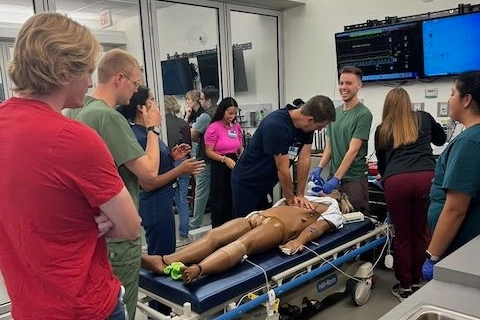
Cardiac Arrest
Residents treating cardiac arrest in the Simulation Lab.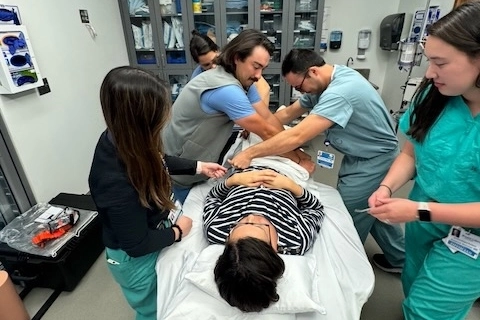
Teamwork
Emergency Medicine and Surgery residents during a multidisciplinary simulation day.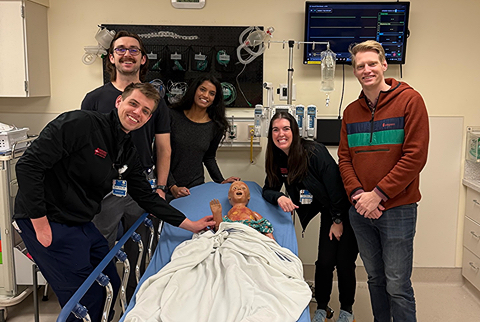
Pediatric Care
Emergency Medicine residents during one of our pediatric clinical care simulations at Children's Mercy Hospital.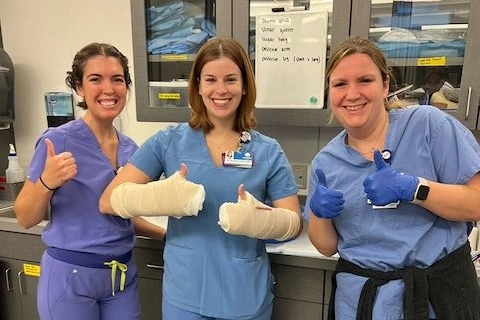
Splinting Workshop
Residents practicing their splinting skills during a workshop.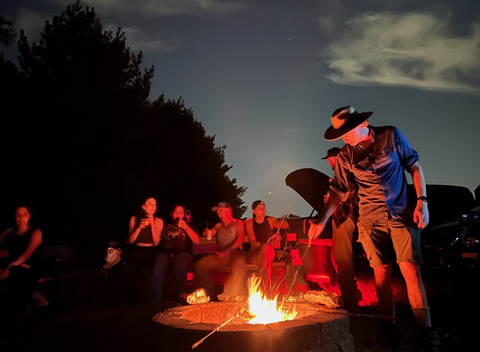
Wilderness Medicine
Evening Wilderness Bonfire
Our clinical and didactic curriculum is one of our biggest strengths as a program, and we're proud that both are heavily shaped by resident feedback. Our curriculum ideally balances our ‘tried-and-true’ methods with a dynamic and evolving approach to training quality emergency medicine (EM) physicians. We believe in the adult-learning theory of education, and as such, our didactics include a large amount of small group learning, an emphasis on shorter lectures (15-30 min sessions are a regular occurrence), case-based learning, simulation and frequent oral board examination practice.
Shaped by regular feedback from our current and former residents, we are proud to highlight our block schedule and some key curricular features. One block is equal to four weeks.
Residency Schedules
PGY-1
- Orientation/EM — 1 block
- Adult EM at UHTMC — 4 blocks, including Emergency Medical Services (EMS)
- Pediatric EM at CMH — 1 block
- Ultrasound — 1 block
- Critical Care Medicine at University Health Truman Medical Center (UHTMC) — 1 block
- Pulmonary Critical Care at Saint Luke's Hospital (SLH) — 1 block
- Neurosurgical Critical Care at SLH — .05 block
- Cardiology at SLH — 0.5 block
- OB at UHTMC — 0.5 block
- NICU at UHTMC — 0.5 block
- Trauma Surgery at UHTMC — 1 block
- Anesthesiology at SLH — 0.5 block
- ED/MSK at UHTMC — 0.5 block
PGY-2
- Adult EM at UHTMC— 9.0 blocks (each month includes 1-2 CMH shifts)
- Adult EM at St. Lukes— 0.5 block
- Pediatric EM at CMH — 1 block
- Critical Care Medicine at UHTMC (as supervisor) — 1 block
- Pediatric Critical Care Medicine at CMH - 1 block
- Elective — 0.5 block
PGY-3
- Adult EM at UH-TMC — 10 blocks (each month includes 1-2 CMH shifts and EMS)
- Adult EM at University Health Lakewood — 1 block
- Pediatric EM at CMH — 1 block
- Elective — 1 block
Clinical Curriculum Highlights
Critical Care
Critical care is a cornerstone of our training- our curriculum emphasizes critical care training for exceptional and diverse critical care experiences. Residents gain extensive experience managing critically ill patients across a wide range of settings—both in our high-acuity ED and during dedicated rotations in medical, neonatal, pediatric, and neurocritical care units. From early in residency, learners take ownership of complex patients, perform advanced procedures, and work closely with intensivists and multidisciplinary teams. The breadth and depth of our critical care opportunities prepare graduates to confidently care for the sickest patients—whether pursuing community practice, fellowship, or academic careers.
During PGY-1 residents have 12 total weeks of dedicated critical care rotations. Additionally, they rotate on Trauma Surgery and are responsible for participating in the initial evaluation and subsequent ongoing management of critically-ill and injured trauma ICU patients. In PGY-2, our EM residents experience another 8 weeks of critical care rotations. They lead their medical ICU teams and manage critically ill patients under the supervision of experienced intensivists—an opportunity that builds confidence and independence. They also rotate through the Pediatric ICU at Children’s Mercy, a nationally recognized pediatric hospital. Here, they manage a wide spectrum of critically ill children, participate in family-centered rounds, and collaborate with pediatric intensivists, nurses, and fellows in a highly specialized care environment.
These rotations offer a rare blend of autonomy and expert mentorship in a safety-net, academic setting that serves a diverse patient population. Combined with high-volume resuscitation experience in our ED, these ICU rotations ensure our residents graduate with a deep, well-rounded foundation in critical care.
EMS
Our faculty members are the medical directors for the Kansas City, Missouri Fire Department and many surrounding smaller EMS agencies, giving our residents unique opportunities to learn about what leading a large pre-hospital system entails. Experiences include a longitudinal EMS rotation that includes ambulance and EMS medical director ride-alongs, as well as projects including EMS QI/protocol reviews.. All of our residents become certified as base-station physicians and provide pre-hospital direction for a large urban EMS system. Our residents also have unique opportunities to participate as healthcare providers at mass gatherings and citywide disaster events. Our residents have staffed medical tents at the Kansas City Chiefs championship parades, the NFL Draft and concerts that are held at GEHA/Arrowhead Stadium.Additional teaching opportunities within paramedicine/EMSare available for those interested. We also have an EMS elective for those interested in pursuing an EMS fellowshipAeromedical experience is not available.
Pediatrics
Our primary site for Pediatric EM training is at Children’s Mercy Hospital (located across the street from our home, University Health), which is consistently recognized as one of the top Children’s hospitals in the country. Our pediatric experience is both focused and longitudinal. The curriculum includes dedicated rotations in the Pediatric ICU, Neonatal ICU, and CMH Pediatric ED (1 full block/year). Our PGY2 and PGY3 residents continue to work 1-2 CMH ED shifts/block while rotating in the UH/TMC ED. This provides continual pediatrics exposure and the ability to see the “seasonal” illnesses that kids often experience. CMH has one of the busiest EDs in Kansas City and was one of the first established Pediatric Emergency Medicine fellowships in the country. Our residents consistently say they feel comfortable caring for ill children by the end of their training. Our longstanding partnership with CMH PEM faculty has shaped both our ongoing pediatric emergency medicine (PEM) didactics and our longitudinal, faculty-led simulations in pediatric EM and critical care.
Ultrasound
Who doesn’t love using ultrasound? We sure do. With the addition of a third Ultrasound-fellowship trained faculty in 2022, we provide robust training and experience in EM ultrasound. PGY-1 EM residents participate in a 4-week emergency department ultrasound rotation. We also have ultrasound-based education each month in our didactic and simulation hands-on curriculum. Longitudinal 1:1 competency based assessments for core US procedures ensures our residents meet the highest standard of quality of care, and are also well prepared for their board examination. We enjoy ultrasound so much we gave it its own page. Please see our dedicated Ultrasound page for more details.
Elective program features
Our residents have elective time during PGY-2 and PGY-3. Residents are encouraged to individualize their elective time based on educational experience needs/interests. The program works with residents to optimize elective time for research or other educational experiences
Recent electives include:
- Street Medicine
- Addiction Medicine
- ICU
- Toxicology
- Sedation/procedures
- Oral surgery
- Radiology
- Ultrasound
- Palliative Care
- Research
- Wellness
- Education/Simulation
- Administration/emergency department operations
EM Department Electives Highlights
Wellective
This two-week elective is designed to be personalized around each resident’s wellness goals, while general guidelines help provide structure. Residents will create an individualized plan aimed at enhancing wellness at the personal, team, programmatic, or national level—mindful of the unique stressors faced by emergency physicians.
At UMKC EM, we center our wellness efforts around three core pillars: community service, career development, and healthy lifestyles. These areas, along with others such as reflection, gratitude, stress management, mental health, sleep hygiene, and the physician experience as parents and whole human beings, offer rich opportunities for exploration during the elective.
The elective director works closely with each resident to help shape their experience, offer mentorship, and connect them with resources aligned with their wellness goals.
Street Medicine
The Street Medicine Elective allows residents to get out of the ED to take care of patients experiencing homelessness in the KC metro area. Residents will venture out on a bus with a team of providers, nurses, pharmacists and volunteers with an organization called Care Beyond the Boulevard. Residents will also become more familiar with resources available to this vulnerable patient population by visiting a local crisis center and a homeless shelter. This elective will increase awareness of the healthcare related challenges that those experiencing homelessness face, and how we can better serve them in and out of the ED. This is a 2-week elective.
Addiction Medicine
This resident elective assists emergency medicine residents in developing an approach to the assessment and treatment of patients with substance use disorder. Residents learn current evidence-based strategies for managing patients with substance use disorders. This experience will enhance the resident’s ability to care for patients in the Emergency Department who present with substance use disorder. This is a 2 week elective and is in partnership with our Dept of Psychiatry.
Wellness and Community Engagement
We have a robust wellness program that includes didactics and special conferences, social events, and book clubs. We dedicate the fifth Thursday of every month to resident wellness. Our department approved an annual residency wellness budget which provides our residency wellness committee with the financial resources needed to fulfill its goals.
Wellness-focused conference days include late start times and, a mix of wellness-related learning focusing on our three wellness pillars. and experiences chosen by the wellness committee to be fun and relaxing and a way to de-stress and connect with peers.
Didactic topics include topics such as career planning, financial wellness, cultural and community awareness, and resilience. Entering PGY-1 residents experience a wellness-focused onboarding with social activities as well as a full-day wellness retreat session led by our department wellness committee. A biannual wellness survey for faculty and residents is done. We love wellness so much that we even have a “Well-elective” that residents can participate in.
Please see our dedicated wellness section for more details.
Residents Quality Management Meeting
A true resident favorite, this bi-monthly 1.5 hour meeting is led and facilitated by our PD and APDs. Residents are provided updates to their personal dashboard that includes performance review information, status on procedure logging, and meeting residency requirements. We discuss clinical rotations, ED operations, housekeeping items and seasonal events. It is specifically designed to surface opportunities for improvement within the clinical environment and residency. Residents are empowered to bring forward agenda items, and dedicated time is built in for open, candid discussion. These sessions are consistently valued because they center entirely on the resident experience—and our leadership approaches them with a mindset of curiosity, humility, and collaboration. The focus is not on being right, but on getting it right—fostering an environment where feedback is welcomed, ideas are explored together, and follow-through is a leadership priority.
“The program has a strong and established presence at the hospital. The attendings are supportive, the residents are friendly and it’s a great learning environment.”
Eric Canaday, DO
Class of 2014
Emergency Medicine Conferences
We strive to make our didactic conferences interactive, interesting and clinically relevant. To that end, we continue to incorporate adult learning techniques such as simulation, small group learning, case-based discussions and the “flipped classroom” approach in addition to traditional didactics. Each month has a dedicated systems-based theme. The simulation and “hands-on days”, journal clubs and theme of the month sessions follow the monthly theme (for example: CV, Neuro, ID, etc).
Each year, we start with resuscitation/procedural basics in July. From there, the theme varies each month but is designed to return every two years. Residents have a suggested reading schedule using Tintinalli’s Emergency Medicine as their core text. For board style practice questions, we use the ROSH Review question bank. Each month, residents complete a ROSH test that is related to the monthly theme. We have developed a comprehensive Google Education website for our residency, which houses our curriculum and a suggested reading schedule, Board preparation resources, resident dashboards, calendars, forms and multiple other learning resources. We can go on and on. Below is a brief description of our regularly held educational sessions.
Case Conference
Weekly conference that pairs one EM attending and EM resident who present an interesting clinical case aimed at highlighting key issues pertinent to emergency medicine. Real-life cases from the emergency department are presented in an interactive manner with the audience, with a focus on problem solving. We implement an oral boards format/style of questioning where a randomly selected resident audience member is chosen to work through the case, with additional audience participation. It is followed by a brief 30-minute didactic from the presenting resident.
Theme of the month reviews
These reviews were revamped in 2019 with resident input and have been a hit. During the one-hour session, three residents will present for 15-20 minutes on three different focused, EM relevant topics, that fall under the monthly systems-based theme. A secondary objective of this session is for residents to hone their presentation skills with only 20 minutes they must work on delivering a concise but memorable talk. The topics are chosen by our EM resident education chief to cover the core EM content of the Model of Clinical Practice of Emergency Medicine over a two-year period (available on ABEM website). Topics are presented by the residents with faculty input and oversight.
Faculty Lecture Series
Emergency medicine faculty discuss core content of EM, including areas of their expertise. Interactive discussion, board-style review questions, current literature review, case-based discussions and simulation experiences are some of the adult learning strategies used.
Resident Education Cases
These 30-minute, clinically based sessions given by faculty focus on practical topics, such as procedures, imaging, ultrasound or ECG interpretation that tie into our “theme of the month”. We often use the EM Foundations Courses for these sessions.
EM Foundations Sessions
During these one-hour, case-based learning sessions, four faculty members lead simultaneous small groups through two, 30-minute cases. The cases are relevant to the monthly theme, PG year specific (tailored to your needs), and are related to some of our asynchronous learning opportunities (see more below). We use the EM Foundations Courses and online curriculum for these sessions.
EM Journal Club
This monthly conference discusses recent journal articles from EM literature with a focus on critically interpreting the literature and developing an understanding of evidence-based medicine. A team approach is used with PGY-1with a PGY-1, 2 and 3 residents presenting different aspects of the article and key concepts with the guidance and input of our departmental research director and a faculty mentor.
Annual Cadaver Lab
Over the course of several weeks each October, residents practice infrequently done, but life-saving procedures with direct EM faculty supervision. Direct feedback on procedural skills is given. This experience includes an annual introduction to the procedures, a procedural knowledge test and skills evaluation. Procedures done include, but are not limited to, chest tubes, pericardiocentesis, thoracotomy, cricothyrotomy, retrograde intubation, DPL and lateral canthotomy. Each session is also paired with procedural simulations in our simulation center and mock oral boards practice. This allows us to keep group sizes small, all while covering a lot of ground.
Wellness series
We dedicate the fifth Thursday conferences to resident wellness-read more above or on our wellness page.
Emergency Medicine Morbidity and Mortality conference
Monthly case-based conferences that focus on improving patient safety and quality improvement and system changes. A chief resident moderates and leads the case-based presentation and collaborates with a PGY-2 who presents relevant teaching points.
Emergency Medicine/Internal Medicine Morbidity and Mortality conference
This interdisciplinary quarterly conference emphasizes a team approach to patient care, including quality improvement practices and patient safety.
Multidisciplinary Trauma conference
Monthly conference with the Department of Surgery that emphasizes the institutional teamwork necessary to care for a trauma patient from the pre-hospital setting to the emergency department to surgery to intensive care to rehab to discharge. Includes didactics from local, regional, and national content experts in trauma care.
Emergency Medicine/Trauma Services Morbidity and Mortality conference
Monthly joint conference that emphasizes a team approach to patient care, including quality improvement practices and patient safety.
Pediatric conferences
Pediatric Emergency Medicine faculty from Children’s Mercy Hospital give regular monthly didactic conferences over core content. Pediatric simulation and sedation workshops are also provided annually. In addition, we incorporate pediatric activities into most of our simulation activities.
Additional Conference experiences
We also host a wilderness medicine conference every other year as well as didactics focused on mass casualty management. A procedural “boot camp” for our PGY-1 class focuseson frequently performed procedures, such as lumbar punctures, ultrasound-guided IV access and slit-lamp usage.
Asynchronous learning
Asynchronous learning is an important part of providing flexibility for our residents. We are excited to provide many opportunities for learning to count towards your conference attendance. Each month, we provide an opportunity for asynchronous learning before our EM Foundations sessions. We send out the suggested reading and related ROSH test and attestation forms to make it easy to participate and get an extra hour of conference credit. We also utilize the Academic Life in Emergency Medicine (ALiEM U) site — an online open-access, peer-reviewed site with many learning modules for which you can receive asynchronous credit. Residents also have opportunity for asynchronous credit through Journal Club assignments, online teaching modules and off-site conferences.